Embodied Intuition: Develop a Reciprocal, Trusting Relationship with Your Body in One Minute per Day
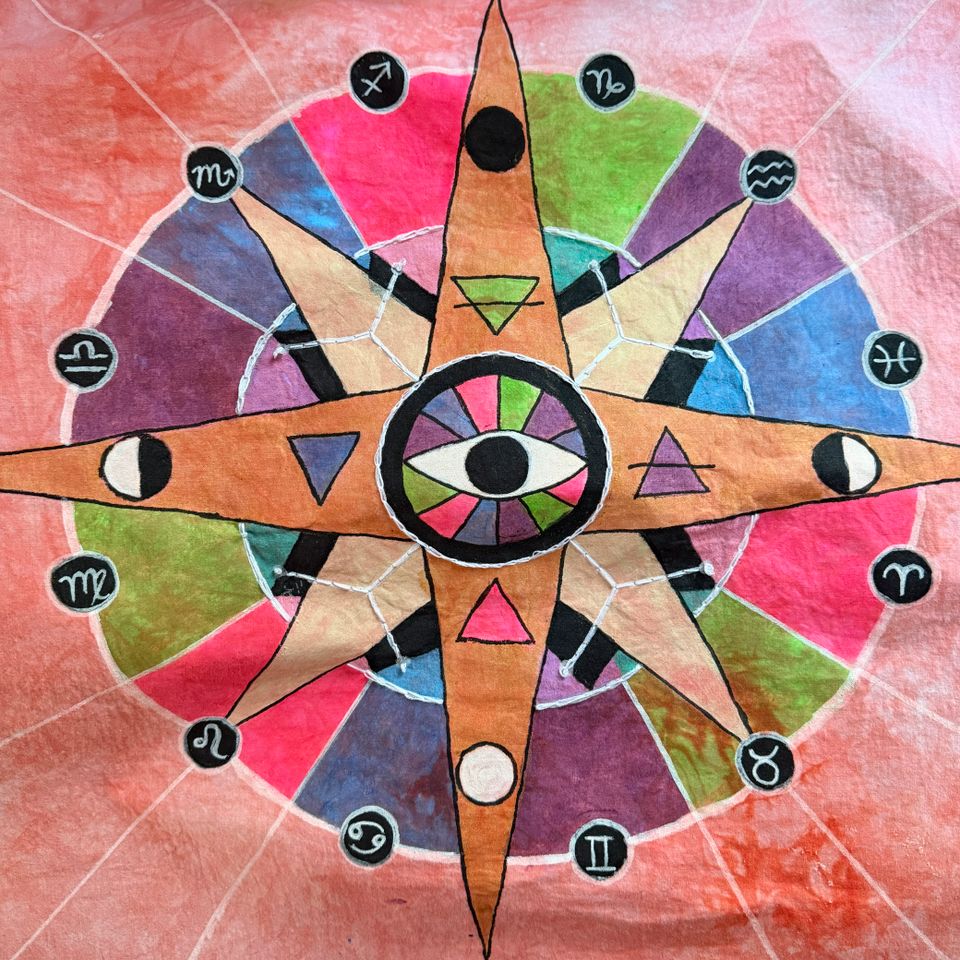
I love time-walking. Hedge-riding, astral travel, astral projection, soul journeys, soul-tending, wyrd-walking. Journeying into the fourth dimension of time. Checking in on Little-me, asking Future-me for advice.
I realized I wanted to teach that — teach how your consciousness can shift to times, places, and locations outside of our physical bodies. Or at least, teach the methods I’ve learned through trial and error in the last 48 years.
But first, folks have to understand the information our physical bodies give us. Our physical bodies, these three-dimensional frequency tuners that inform us of where we are in time, space, and beyond.
If we can’t interpret the signals our bodies are giving us, day in and day out, we can’t understand how to leave and return to these bodies safely.
That’s where embodied intuition comes in. Only after we understand how our intuition speaks to us through our physical bodies can we begin to understand how to move within the energetic world (or other dimensions, depending on the framework you use).
The practice of embodied intuition that I teach is a daily check-in that takes a minimum of 60 seconds. If you’ve got five minutes, more’s the better, so you can journal about your experience.
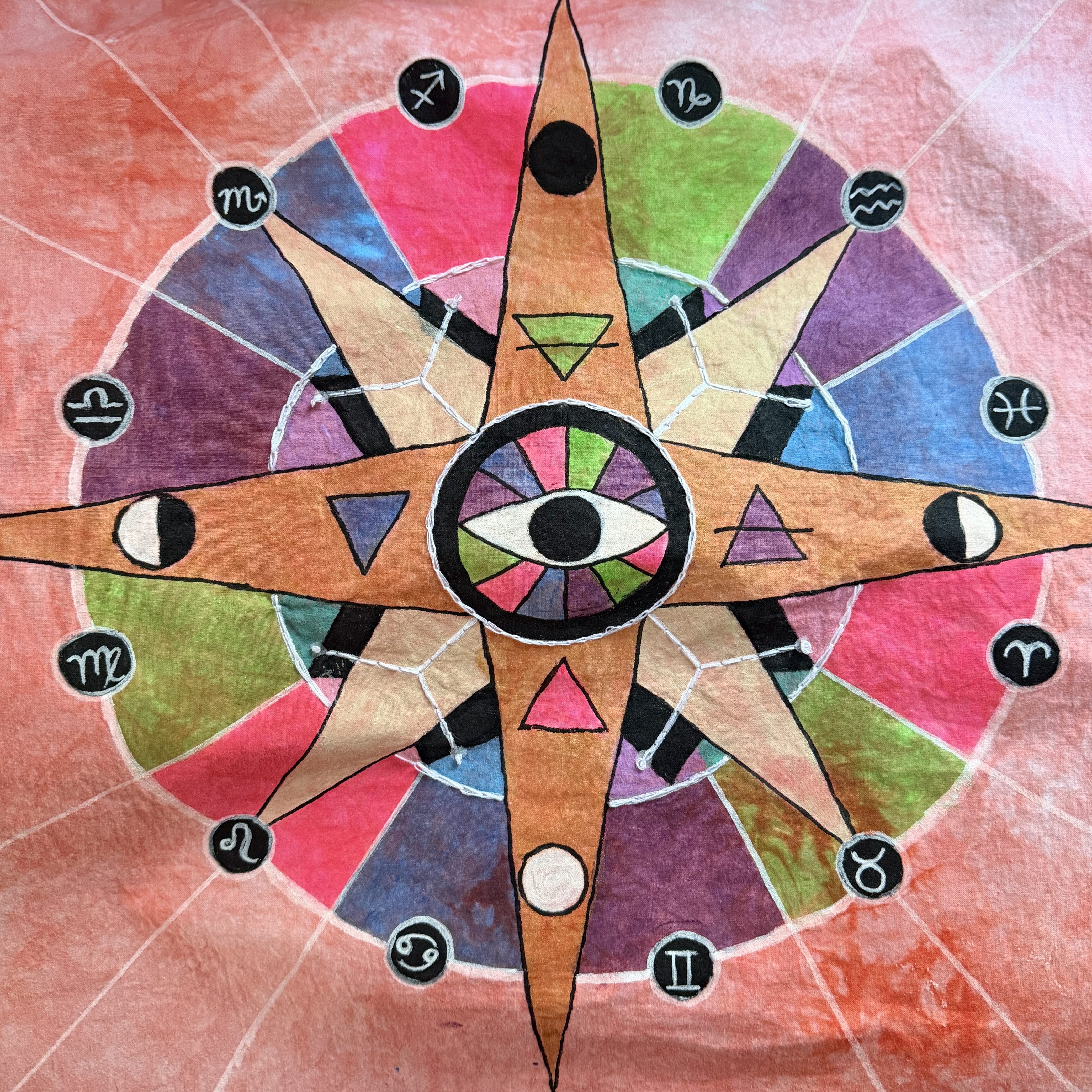
Embodied intuition becomes the compass that guides you into, through, and around the energetic world.
I began teaching embodied intuition in 2020. I used an approach that, in hindsight, I now see as an imperial, colonial, white supremacist way of thinking. In my previous iteration, we approached the body through the lens of the mind-as-superior. This is what we’ve been taught — that our mind-brains know more and can override the “base animal instincts” of our body-brains that white European scholars decried as savage. Using the idea that “civilized” folks should lead their lives from intellectual intelligence only, my forbears crushed indigenous peoples and ways of life.
Let’s not crush our own body-brains, yeah? What if we began tuning our mind-body frequencies to our body-brain frequencies? What additional knowledge might we gain? How might our body-brains light our paths forward when we begin to interact with our body-brains as a trusted friend, a committed community member, and a necessary aspect of our whole selves?
I’ve worked to change the language around this practice, and added important trust-building aspects, in the hopes of decolonizing my original approach. As a white trans man, I continue to discover blind spots in my ways of thinking. I remain open to feedback to adjust the framework to ensure a continued post-capitalist, post-white-supremacist approach.
Our Physical Bodies: The Body-Brain
Our physical bodies carry us through the material world. Some folks say we’re haunted meat suits. Others say we’re spiritual beings having a physical or human existence. Still others don’t believe in anything other than what we can physically see, hear, taste, touch, or smell.
I like to think of our bodies as the tuner or receiver for the three-dimensional, material world.
Your body may look like an average human being within your culture or society. Or you may look different—maybe a little bit, maybe a lot. Maybe it’s intentional, and maybe it’s not.
However we view ourselves, if you’re reading this, you are in a physical body.
Our relationships to our physical bodies are so often imbued with judgment and hatred, usually due to these differences from what we see as “normal.” We may hate our physical bodies for being too fat or too thin. For being unable to do what others do. Some of us? We hate our physical bodies simply for existing, because it’s within these physical bodies that we feel so much pain.
A lot of us, especially those of us who are drawn to energy work, have had some pretty crappy experiences in our bodies. We don’t like our bodies. We don’t want to BE in our bodies.
My own body was a place of fear. To be in my body was to be unsafe.
My body didn’t match my brain’s map of it. And my body was used, by others, to fulfill their own needs and desires around love, pleasure, and pain, from the time I was a toddler. Acknowledging that I even HAVE a body was something I couldn’t do for decades. Developing a relationship with my body took consistency to build trust.
I’d like to invite you to experience your body from a different perspective. A perspective of neutrality. Regardless of whether you love or hate your body, or parts of your body. Regardless of whether your body operates similarly or radically differently from those around you. Regardless of what anyone has ever told you about your body.
Your body is valid.
Your body is neutral – neither good nor bad.
Your body, whether you like it or not, exists.
Now, perhaps, you can decide how you want to be in relation to it.
To be intuitive is to be embodied.
Not only do all living human beings have a physical body, but everyone is intuitive. Everything on this planet is constantly emitting energetic frequencies; it’s up to us to learn how to tune in to hear those frequencies.
It’s not our mind-brain that picks up the frequencies. It’s our physical and energetic bodies. In my own experience, I have begun to tease out which communications and sensations come directly from my body-brain, which come from my intuition/energy-brain, which come from my mind-brain, and which come from, well, all the rest of the parts that make me “me.” I’ve learned that my mind-brain isn’t the sum of who I am; my mind-brain is the leader that facilitates coordination of all the rest of the parts of myself.
Our physical and energetic bodies communicate with us through sensations. An internal “felt” sense. Emotions: Pain, joy, happiness. Physicality and interoception: Distance, space. Metaphor, symbolism and archetypes: The Tower from the Tarot, a rose signaling love, blue signaling peace.
Close your eyes right now and see if you can begin to feel where you are in the room. Is there another person or animal nearby? With your eyes closed, can you begin to sense them? What other sensations come up?
That’s the form of communication we’re looking for.
When our body-brains or intuition-brains give us information, our mind-brain translates the sensations and symbolism of the message into our native verbal language (English, for me). Most of us in the Western world have been trained to ignore our body cues in favor of our mind-brains. We’re missing out on so much more!
A Word of Caution
Trauma—especially unprocessed or unresolved trauma—manifests in our physical and energetic bodies and can make being in our bodies or paying attention to our bodies feel really, really uncomfortable. Unsafe, even.
If you aren’t ready to acknowledge those emotions or feelings, it may not yet be time for you to explore embodied intuition. It’s most helpful when you are prepared for these uncomfortable emotions as you begin to pay attention to your body. I also recommend making sure you have a good support system in place: A therapist, a coach, a friend, a spouse, a really good algorithm on Threads or Substack (don’t underestimate the power of connecting with other humans, even if it’s online!).
If you feel ready? Then let’s go! But let’s take micro-steps. Don’t overdo it; that’s the quickest way to give up on a new effort. Instead, recognize that you can find benefit in the following exercise even if you only take a literal minute to complete it.
How to Be in Relationship
The embodied intuition process opens the door for us to begin a reciprocal relationship with our physical and energetic bodies. It won’t necessarily be easy. And there may be days where you just don’t want to talk to your body. That’s okay. That’s how relationships go, right? Don’t worry about putting pressure on yourself to be perfect or to become friends right away. Allow yourself the space you need to create a long-lasting relationship built on mutual trust.
Trust and Consent
Consent between humans is important, but I want to extend that conversation to consent with ourselves. Sometimes, our bodies don’t want to speak to us. Sometimes, our bodies are terrified of having any sort of attention placed on them. That’s okay.
That’s why, each time you sit down to do a body scan, you’ll ask your body for consent.
If, when you ask your body for consent to do a body scan, it returns with a “no” feeling or sensation, honor that. Seriously. Let the consent part of the practice be a way for you to build trust with your body. When your body is ready, it’ll let you know.
Every time you move forward regardless of your body’s input, you are teaching through action that you don’t listen to or honor your body. Why would your body trust you?
The point isn’t a daily practice that you do even if you don’t want to. The point is a daily practice that opens a portal for communication to occur, if the trust is there.
The Body-Scan Technique
The body scan technique is pretty simple: Scan your body from your head to your toes. That’s it. That’s all, for reals! I’m sure you’ve come across this technique in a variety of meditation practices.
But! You aren’t just scanning your physical body. You are scanning your energetic body, too.
When you do a body scan, you are scanning for impressions of colors, shapes, sizes, angles, and temperatures. Maybe you will receive visual impressions or sense a smell or hear words. You are energetically using your five senses to discover what is going on in your body. Some people “see” things with their mind’s eye. Some people only sense a feeling. Others hear messages. It all depends on how your mind-brain processes the physical world.
The body scan seems simple, but it can quickly become complex when our bodies return information to us that we don’t understand (which is what will happen, especially when you first begin!).
As you develop your regular practice, you will deepen your relationship with both your physical and energetic bodies. In doing so, you will begin to understand the energetic frequencies within and around you — what’s yours, what’s not-yours and how your energy moves and behaves.
This relationship is key to understanding your intuition. The scan isn’t something you do once or twice, or maybe whenever it occurs to you. The point of the program is the daily repetition of opening the door to the practice in order to observe, create relationships, understand trends and ultimately learn the language of your bodies.
Here are the four steps to a successful body scan:
Ground and center with your favorite method (leave a comment if you’d like direction or an example)
Ask your body for consent: May I scan you today?
If yes, continue
If no, STOP
Start at the top of your head and work your way down your body (or start at your feet. Or anywhere, really. Whatever works for you.) Scan for sensation. What pops into your mind? What do you feel? See? Hear? Taste? What colors? Temperatures? Shapes? Sizes? Are any messages coming through, even things that seem silly?
Journal (collect that data!)
Common Questions
What if I don’t sense anything?
That’s a sensation in and of itself, yes? So note it and keep moving through the scan. Maybe poke at the “nothing” and see what happens.
What if it’s all black, or it’s a void?
That, too, is a sensation! Your body may not be ready yet to share with you. It may not trust you yet. That’s okay. Note it and keep moving through the scan. Maybe poke at the black or void to see what happens.
What if I can’t move beyond a certain point in my body?
That happens all the time! Some areas are NO-GO zones right now. That’s okay. Note it and keep moving through the scan, picking back up where your body says “Okay.”
What if the sensations are really yucky?
Oof, a common reason why folks won’t continue the body scans. Our bodies hold a lot of emotion, and most of our trauma is buried away in our cells. Note what the yuckiness feels like. Is it tar? Sticky? Dark? Smelly? Mine is often a yellow bile substance. After noting it, keeping going and finish your body scan.
Don’t worry about analyzing it.
Don’t worry about whether it makes sense at first.
Just keep going.
Do I have to journal?
I highly recommend it. Keep reading to learn why!
Next Step: Making it a Habit
The most important part of this entire program is to develop a consistent practice. When I first began teaching this, I really emphasized doing a body scan daily. But I soon realized that trying to do something every day—while a great idea and totally effective—can often make people feel like failures. Because, inevitably, life happens. We miss a day. And then, because of how we’ve been conditioned, we think, “Well, I already screwed it up this week; might as well skip it the rest of the week.” Shrug.
Oh, those perfectionist tendencies! They get me every time.
So instead of focusing on doing this daily, let’s focus on doing a body scan regularly. Set aside time on Sunday, or whatever day marks the beginning of your week, to look at your weekly planning pages. Determine how many times this week you will do a body scan. And then add a day to it to give yourself a stretch goal. (Or don’t: Do what works for you. I personally LOVE stretch goals.) Use whatever planning system you already have in place to document what days you’ll do the scan: Write it in your paper planner or schedule it on your Google calendar. Set a reminder on your phone. Whatever it is that will help you remember to do your scan.
Think of it this way: What can Now-You do so that Future-You thanks Past-You for being such an awesome team player?
Life Hack!
Do you brush your teeth each morning? Then you can do this! (If you don’t brush your teeth each morning, then find something that you DO complete consistently everyday, preferably in the same place in your house.) Let’s create a visual cue: Go put a candle and lighter next to your bathroom sink. Like, right now, so you don’t forget. Go on, go do it. I’ll wait.
Okay, now that you have the candle and lighter in place, don’t worry about it till tomorrow morning. When you go to brush your teeth tomorrow morning, you’ll see the candle, and it will remind you that you want to create this new habit. Light the candle. Take a couple deep breaths, maybe. Then, while you brush your teeth, do the body scan.
Future-You will TOTALLY thank Past-You for setting this up.
Journaling: Data Collection
You’ll often hear me talk about collecting data. Collecting data allows us to understand the who, what, when, where, and most importantly, WHY we do things, so that we can determine if and how we’d like to make changes.
What is data? Well, everything. Your feelings are data. Your thoughts are data. How many times you do a body scan each week is data. A weird itch in your body is data. Pain in your ankle that won’t go away is data. Data is not something we judge or dismiss. It is simply facts.
This is where the journaling comes in. Our minds are biologically wired in such a way that we don’t recall things perfectly (or at all). Especially when it comes to our bodies and the deeper emotions we keep stored there, because we’ve stayed safe all these years by NOT remembering the stuff we’ve tucked away into our bodies. Journaling about your experiences will help you document what you are learning, begin to pick up on trends, and develop your personal language of metaphor.
So journal every time you scan. Even if you just note a sentence or two. Your journal can take many forms, including:
- Voice memos
- Handwritten journal dedicated to the practice
- Online journal
- Art journal
- Posting your notes about your body scan in an online Intuition 101 group
- Any combination of the above
Try it!
See how it goes for a few weeks and what kind of information comes out.
I’m curious: Do you do a similar practice? Have you tried anything similar? Do you think this practice is something that you might find beneficial? Why or why not?
I’m contemplating running a 4-week or 12-week cohort for embodied intuition where we meet weekly to discuss our scans, any questions that arise, and to go through a group body scan with discussion to help us gain more perspective by hearing other peoples’ journies. Is this something you’d be interested in?
Coming soon: Riding the energetic waves through time!
—
Hawth Reiter is a trans husband, dad, writer, artist, tarot reader, teacher, philosopher & animist rooted in reciprocity, communication & courageous conflict resolution. Learn more or book a reading at HawthReiter.com.
—
No AI was used in creating this article.