Mapping the Relational: How Metaphor Can Reorient a Conversation
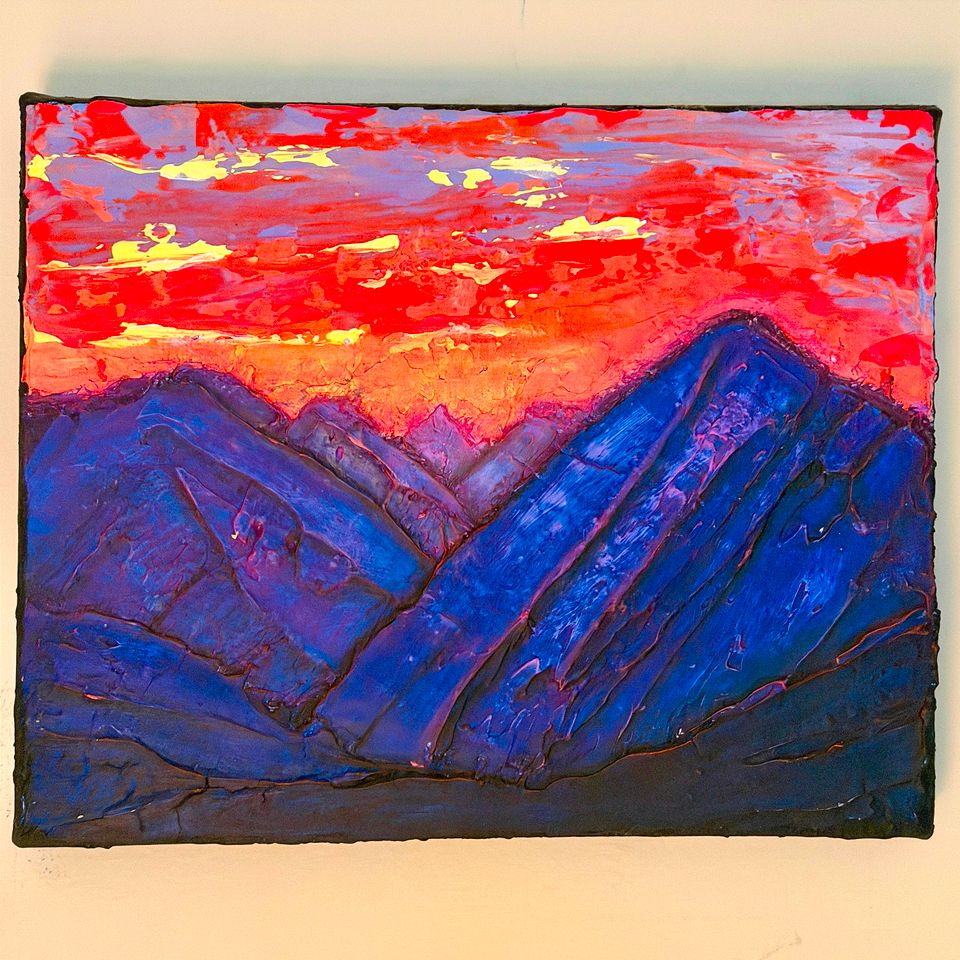
Echoes Over the Grand Canyon
A year and a half ago, my wife was ready to leave me. Our disagreements had gotten deeper and broader. We were on opposite sides of the Grand Canyon, yelling across the vastness and trying to interpret the echoes of what we thought we heard the other person say. I couldn’t let go of the fact that she’d casually said some of my behavior felt borderline abusive when that was not who I was as a person. If I was so fundamentally misunderstood and unseen, perhaps splitting up was the wise move.
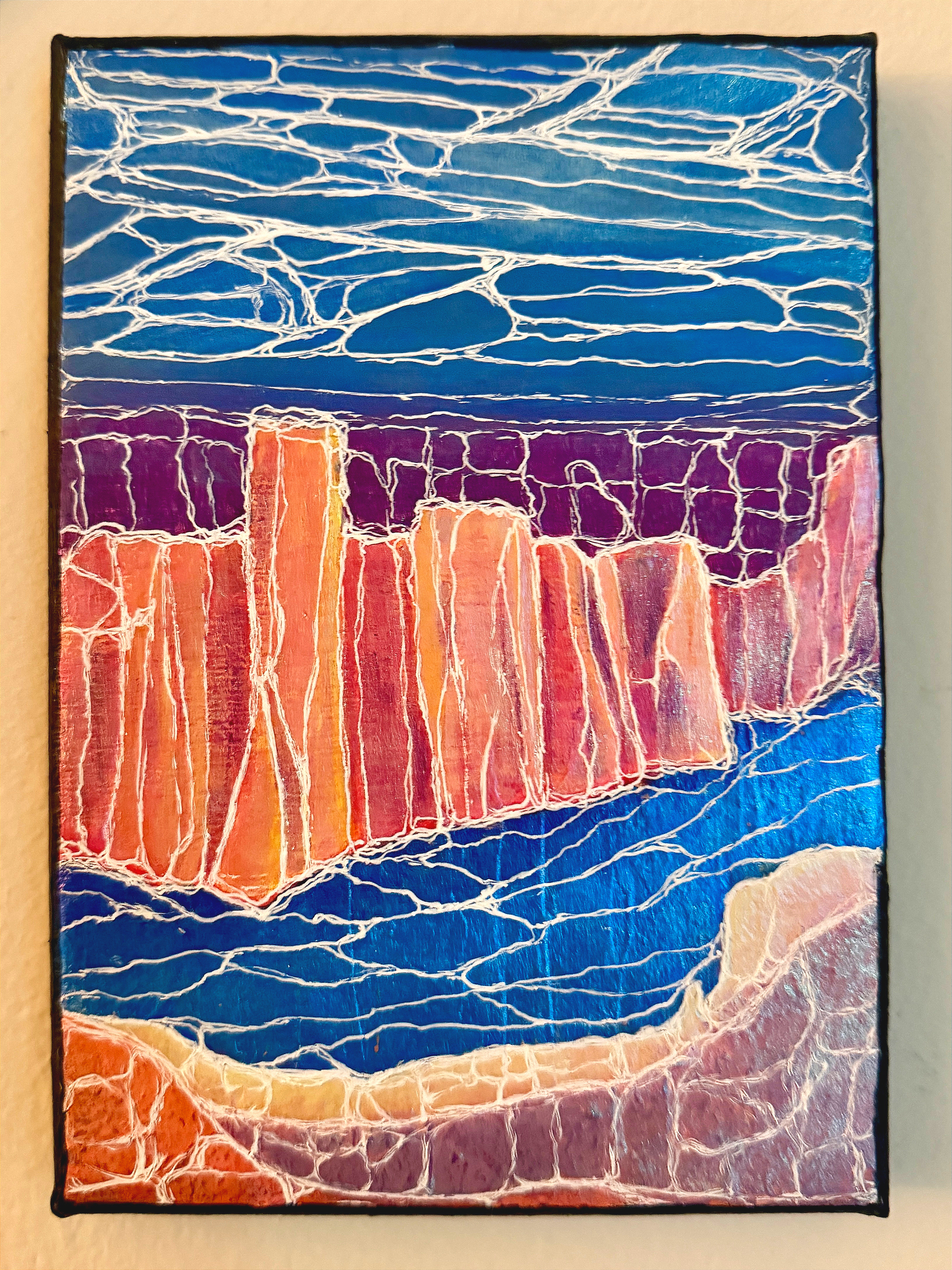
Instead, we went to therapy.
One of the first exercises assigned to us was to take turns directing the other person to draw an image. The image was a random assortment of lines of dots from a workbook; each person had a different image to describe to the other person to draw. The person drawing couldn’t look or ask clarifying questions; they were instructed to draw only what the describing person said.
We almost ended in tears.
Needless to say, neither of us drew anything similar to the actual images we both described.
This practice blew my mind.
It turns out that we often entered conversations and disagreements from different frameworks that resulted in differing rubrics. We couldn’t solve any of our challenges, because we both were so insistent that our feelings were valid (they were, and are!), just like the lines and dots and spaces in the images we were describing (to no avail) were real.
I consider myself to be pretty self-aware. I’ve been in therapy on and off for years. I’ve read self-help books, done workbooks, written workbooks and workshops, and yet, here I was in my late 40s, unable to face facts: I suck at communication.
To be fair, I think we all do. We have not been taught how to cultivate and be in a reciprocal relationship, whether 1:1 or in a group setting, in a way that supports the group.
I think that’s because it takes vulnerability and a willingness to not only be wrong but to be willing to actively take in and adapt to new information. While I didn’t intend for my actions to land as borderline abusive, they felt that way to her.
Full stop.
My impact was very, very real.
It’s scary to think that a tenet upon which we’ve built our lives—or a choice we’ve made, whether intentionally or not—is causing harm to us or someone around us. Most of us try to avoid culpability and responsibility at all costs. We don’t want to be seen as bad people. We all carry deep shame internally that we are wrong, that we don’t matter, that being wrong will result in abandonment. We hate being blamed for someone else’s feelings, especially when, from our point of view, there was zero intent to cause upset. “They’re overreacting,” you might think. Or, “That’s not what I meant at all, and you are taking it wrong on purpose.”
What if we took a different approach?
Meeting in the Middle
What if we allowed ourselves the space to be “wrong,” or acknowledge that an action we took caused discomfort or harm in another? What happens when we explore the gap between intent and impact? Descend into the Grand Canyon, so to speak. What might we learn?
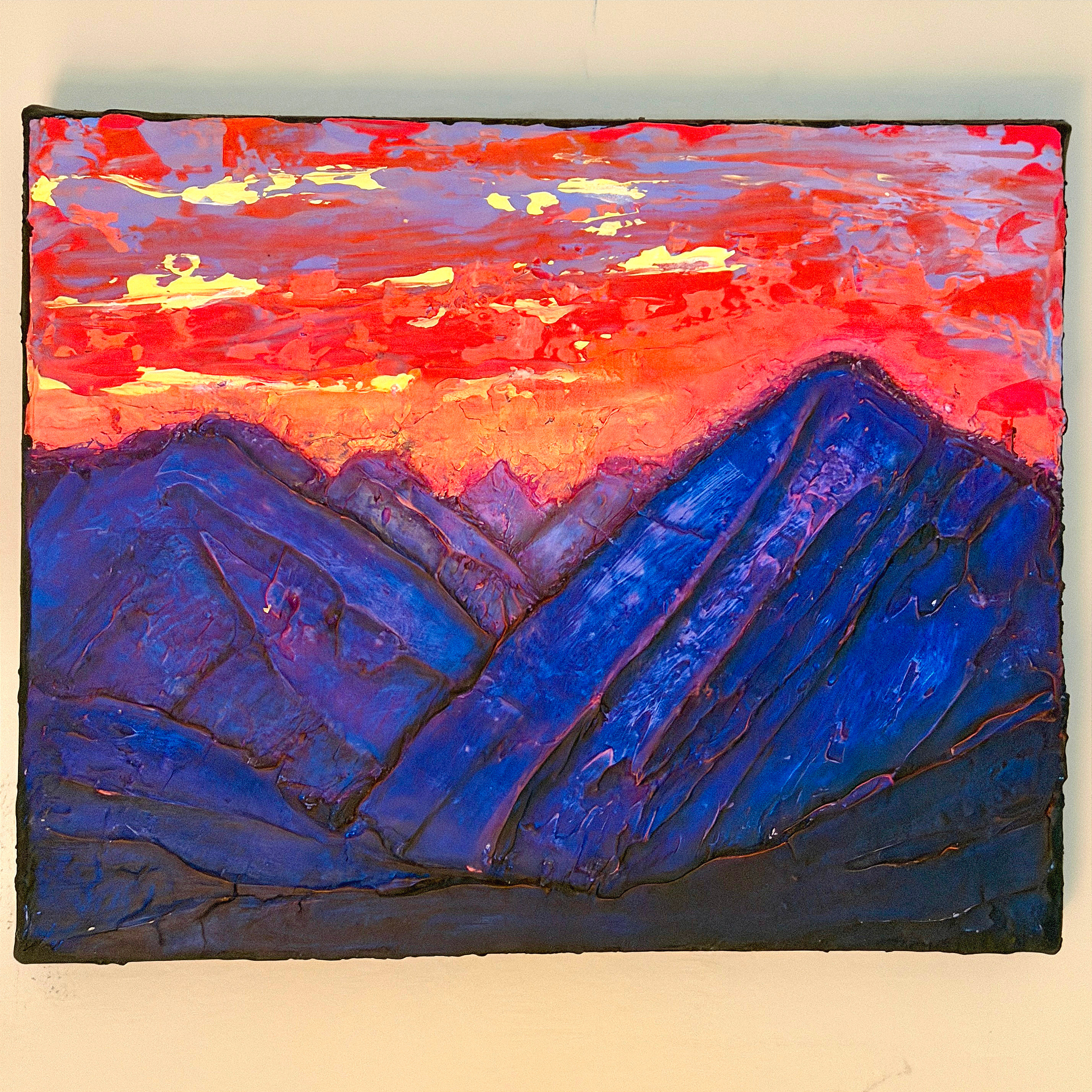
That initial exercise between my wife and I helped us arrive where we are now. Over the next 18 months, we hiked toward the bottom of the Canyon, slowly descending through twists and turns—and the occasional metaphorical donkey doo—and translated our experiences to each other as we went. When we finally arrived at our destination, we documented the following core truths as our family values that we can return to, again and again, even when it feels like all is lost.
Core Truth 1:
In our home, it is impossible to get or be “in trouble.” No one is ever “wrong.”
There are disagreements and miscommunications galore. Big feelings abound. It sucks. We hate it. There’s no getting around it, because we’re human, and we have different experiences and wounds and triggers, and feelings are normal, even negative ones.
Core Truth 2:
Communication is tough, even between people who love each other and want to be good communicators.
People enter conversations with their own frameworks and rubrics for success.
Core Truth 3:
Everyone’s point of view is their sovereign truth. Not only that, but everyone’s truth is valid.
Our truths don’t have to be the same for us to be in alignment, to be in community, and to love and be loved.
Core Truth 4:
You can always make a different choice. You are allowed to change your mind, at any time, for any reason.
Core Truth 5:
When people are expressing frustration or other negative emotions, there is a hidden (or not-so-hidden) unmet need. Always. Even when it’s our 4-year-old “throwing a tantrum” about a stuffie.
Core Truth 6:
Everything is a negotiation.
No one person has the final say-so unless it’s a health or safety reason.
Core Truth 7:
As the world crumbles around us, community is vital and relationships are necessary.
Being in community, or being in relationship, means we stick around when the going gets tough. We put in the effort to make things work. We spend time developing bonds, developing trust, developing a shared language. We don’t just ghost the minute there’s a misunderstanding (and oh man, is THIS a skill I’m still learning).
Secret Core Truth:
There’s always a secret third (or fourth or 100th) option.
Core Notes:
Quick caveat for the naysayers (and the cynic in my brain crying out at the large generalizations I’m making): I am not advocating for staying in a situation that is harmful, abusive, or legally wrong. This is assuming we’re talking about everyday conversations that get derailed, whether online or in person. Sometimes, we have to have the hard conversations to understand that a situation is truly harmful. GTFO if that’s the case. Leave. Ghost. It’s okay; nothing I’m saying in this article is the one and only truth.
Mapping the Gap
English seems particularly egregious for its lack of words surrounding relationship building; no surprise that the language of the colonizer frames interpersonal conflict as a power dynamic.
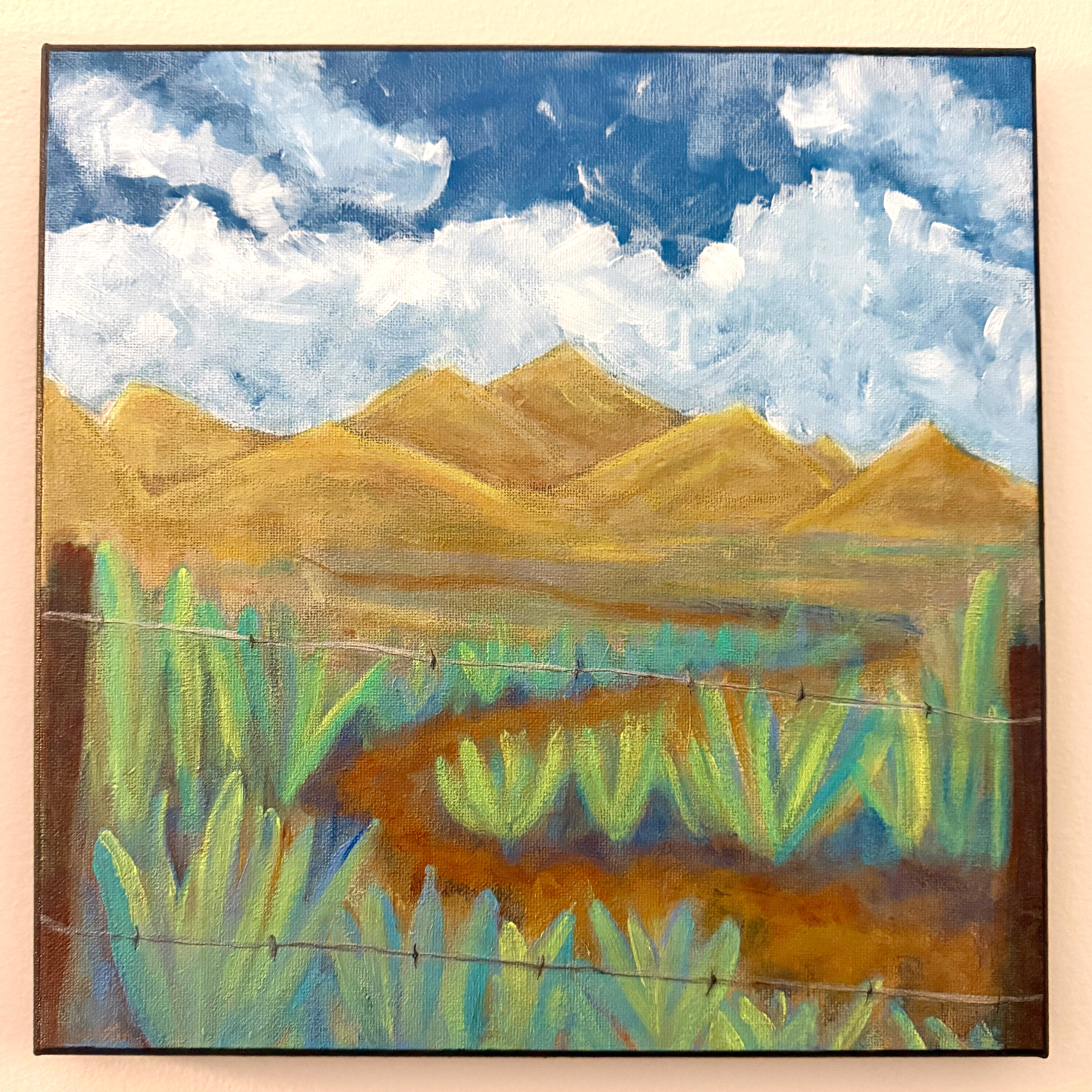
But we do have metaphor. In fact, as scholars George Lakoff and Mark Johnson say in “Metaphors We Live By:”
“Our ordinary conceptual system, in terms of which we both think and act, is fundamentally metaphorical nature…Our concepts structure what we perceive, how we get around in the world, and how we relate to other people.”
We don’t pay much attention to our conceptual systems. We just operate within them. But when we illuminate the constructs in which we operate, we can begin to change them. And language is the foundation of our constructs.
When my wife and I are in the throes of a misunderstanding, it’s helpful when one of us recognizes what’s going on and says something. That indicates we recognize we need to shift perspectives. Both of us.
Next, one of us will try to explain how we feel using any metaphor. You literally can’t go wrong with a metaphor. (Well, okay, sometimes we start with one and end up with another that’s better, but still…)
It’s like we have a blank piece of paper on the table in front of us, and our goal is to map the terrain.
Let’s continue the use of the Grand Canyon metaphor for a meta-metaphor. Perhaps my wife’s understanding of something in the argument or conflict feels like the entire Colorado River during winter storm runoff. I happen to view the same thing as a dry streambed—sometimes it fills with water, but usually it’s dry. And while it may be dry for me most of the time, it’s always full for her. At that point, we each have to consider where we’re coming from. If we take the new or additional information, context, and perceptual vision from our partner into consideration, do we still view it the same way? We can always change our mind.
Sometimes we have to ask clarifying questions. Sometimes, one of us doesn’t understand the relationship or perception the other is attempting to convey. That can get real frustrating, real quick. Nevertheless, we persist until we both confirm that we both understand where the other one came from, what they are seeking, and what we’ve now negotiated through metaphor. Once we have a map, we can refer to it again and again (and we do!).
In fact, this is now such a part of the rhythm of our conversations that, as I am writing this article and chatting about the difficulties of trying to make this all make sense on the page, my wife confirmed her understanding of my situation by providing me a quick metaphor. Getting this article out of my system has taken me days of struggle, and I want it to be quicker and easier. Her response? “It’s like you’re a sapling tree, still growing. You can’t have all the leaves an adult tree would have; you’d fall over with the weight.”
A simple metaphor that validated her understanding, but also reframed my situation using a beautiful image that conveyed so much more than just “a tree.”
This is the magic of using metaphor to map our world and our relationships. It’s already prebuilt into your hardwiring. Now you just need to start paying attention to it.
Creating Your Own Maps
Is this something you already do or have already learned?
What might it look like if you tried this in your next disagreement?
Has your family come up with your core truths/values?
—
Hawth Reiter is a trans husband, dad, writer, artist, philosopher, tarot reader, and animist who speaks with the spirit world more than the physical world. Wanna learn more? Book a reading, mentorship, or mediumship session at HawthReiter.com.
—
AI Use Disclosure: Claude Opus 4.8 was used as a thought partner to spot gaps in my thinking. It was not used to write any of the article; every em-dash is my own.