When Your Own Brain Gaslights Your Body
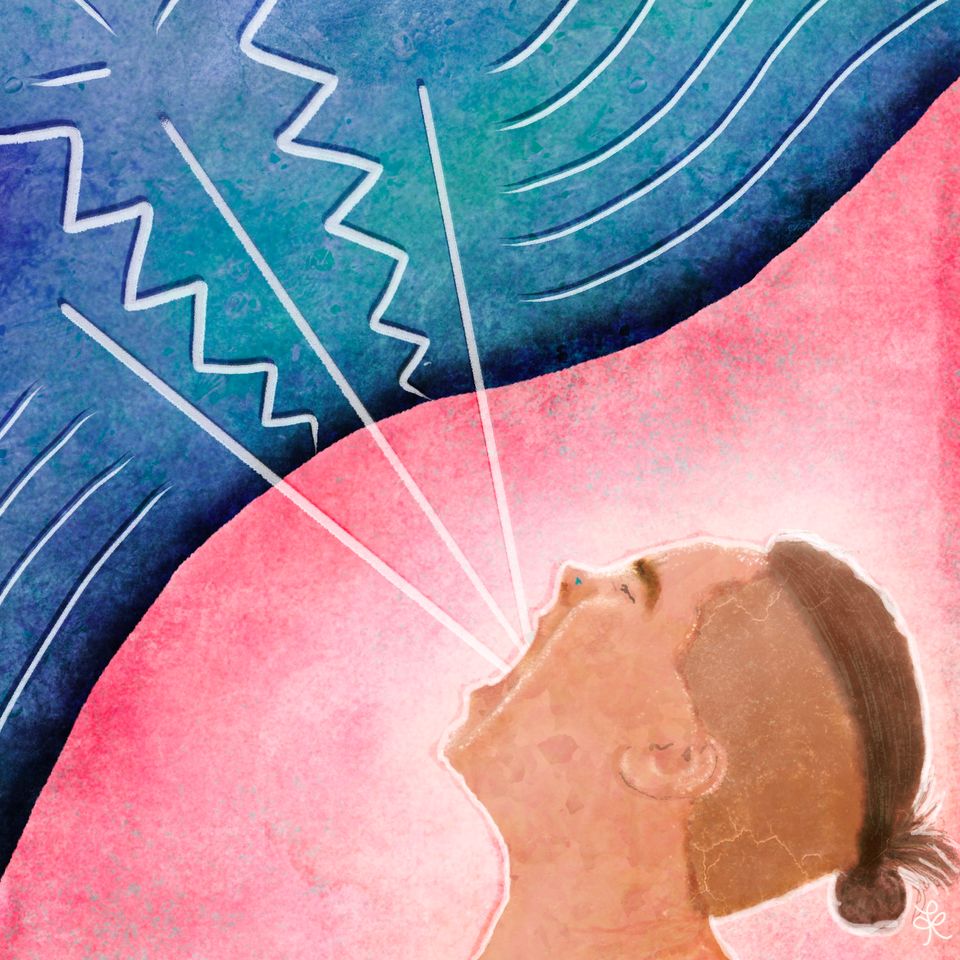
Unexplainable hives for 18 months. Unexpected moments of pain. Swollen joints. Migraines and ice-pick headaches. The “itchies” that spread from my eartips to the back of my head, to the inside of my bones. Asthma limiting my movement. Excruciating nerve pain that resulted in a multi-level cervical neck fusion surgery. Degenerative disk disease and bone spurs and gastrointestinal flares and GERD and pain, so much pain.
You’d think for someone with a history of teaching embodied intuition, I’d have better knowledge of my body and the ways in which it’d been telling me via emotions that I’d been mis-using and abusing it for years.
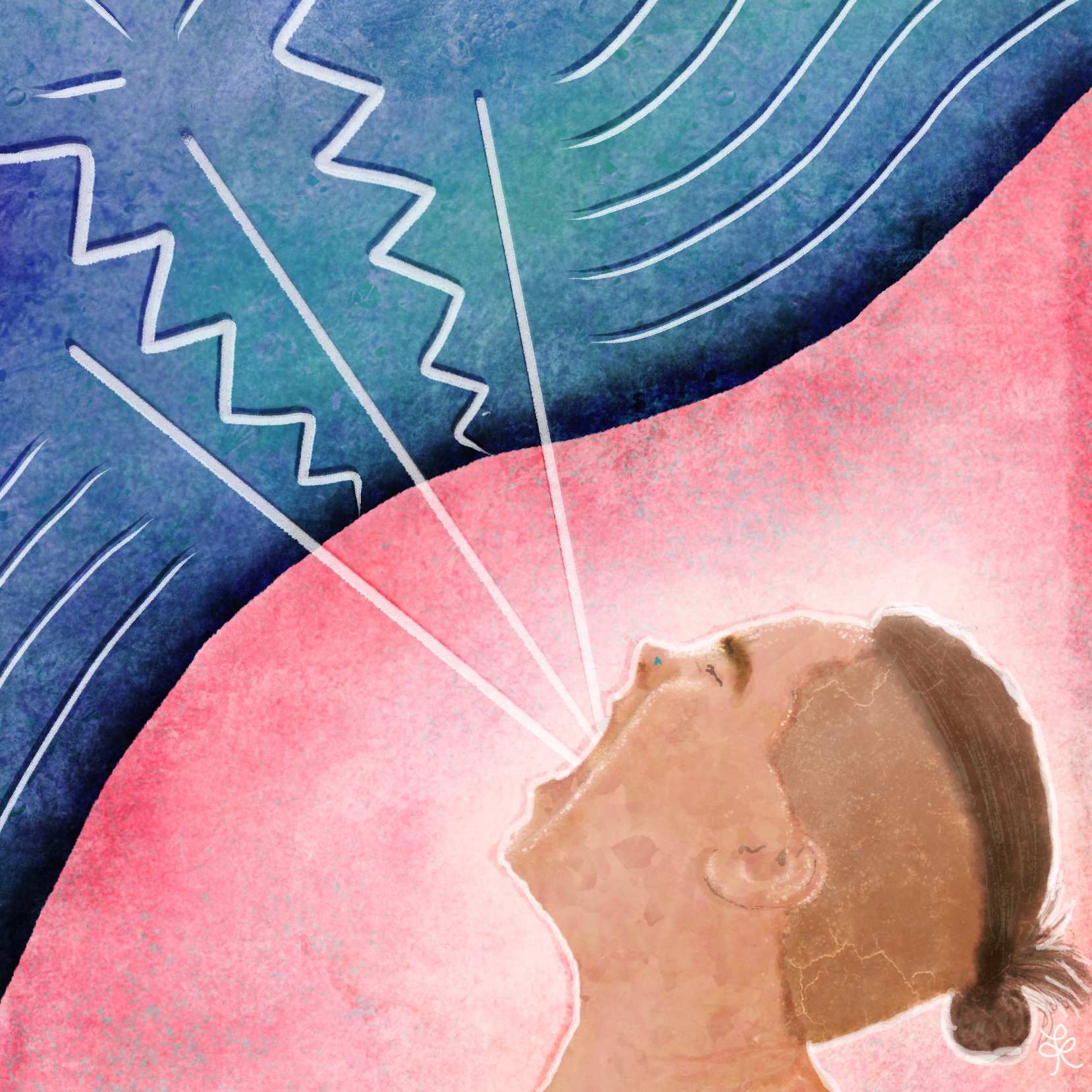
Why did my body keep screaming while my brain stayed silent?
Even as I conducted daily body scans, built up a language of symbolism between me and my body, and provided opportunities for my body and brain to work together for emotional healing, my brain — conditioned by our English language and cultural expectations — approached every interaction through the particular lenses of white supremacy, colonialism/imperialism, and the patriarchy. Healing was a “goal,” something to be achieved. I was something “broken,” to be “fixed.” I wasn’t valuable unless I was productive.
Why didn’t meditation or self-care fix my pain?
Unbeknownst to my brain, he was operating within the framework that European Enlightenment figures proposed and the Industrial Revolution codified on a global level:
- The body is a machine directed by the brain; the brain is the seat of reason and knowledge acquisition
- “Objective” and measurable observation is the only way to trust what is “real” and how to make decisions; emotions, or felt sense, cannot be trusted
- People are machines to be optimized for measurable output, and strategy is decided by upper levels of management (people become the body, and management becomes the brain)
On a local level (that is, my body), every time my brain and body communicated about my emotions, my brain did so from the point of view of being the “reasonable” one who ultimately knew best, much like a parent might be. I may have meditated each morning with a body scan to check in, but my brain overrode the information, forcing my body to push through whatever I was feeling. Putting the emotions on pause, waiting until I have a vacation or a better day or some secret third thing.
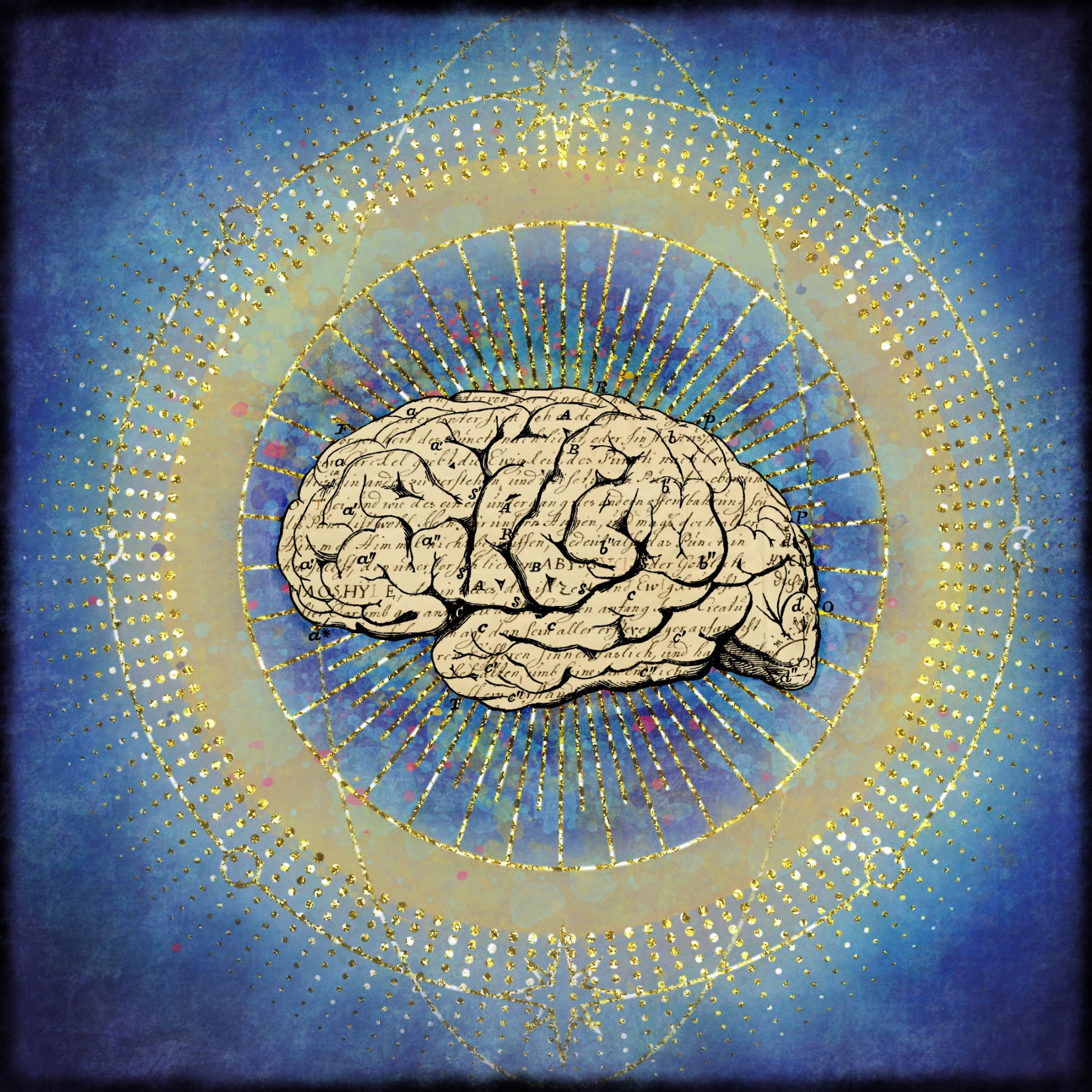
Is my brain actually gaslighting my body?
Yes, and here’s why and how. The culture that has developed through the widespread implementation of this brain-over-body and objective-over-subjective (civilization-over-animal-instinct) has resulted in billionaires acquiring a buttload of capital, all while gaslighting us into pushing our overworked bodies to the point of failure. (Don’t get me started on the amount of work it takes for someone who is disabled to be supported within this system!)
Even after doctor after doctor told me I needed to reduce stress, my body continued to rebel. It didn’t help that I was stuck in a job that was demanding too much of me. When I tried to advocate for better work-life balance, my then-boss looked at me and shrugged her shoulders as she said, “Well, agency life isn’t for everyone!”
I realized:
- You can’t meditate or self-care your way into peace when you are an active member of a toxic system
- You can’t begin to reduce the overall stress load when your own brain weaponizes “reasonableness”
- Your emotions are actually incredibly important feedback from your body that should be prioritized as important signals of communication
- Your body is a finite resource that you must prioritize
My body will not turn off the constant state of fight or flight if I don’t change my thinking. I can’t control other people or large systems, but I can begin to take a look at the ways in which my brain might be unintentionally enforcing systemic or cultural values that I no longer identify with or believe in. I began decentering what I thought I was supposed to be doing and began listening to what I actually wanted to do. What kind of life aligns with my beliefs?
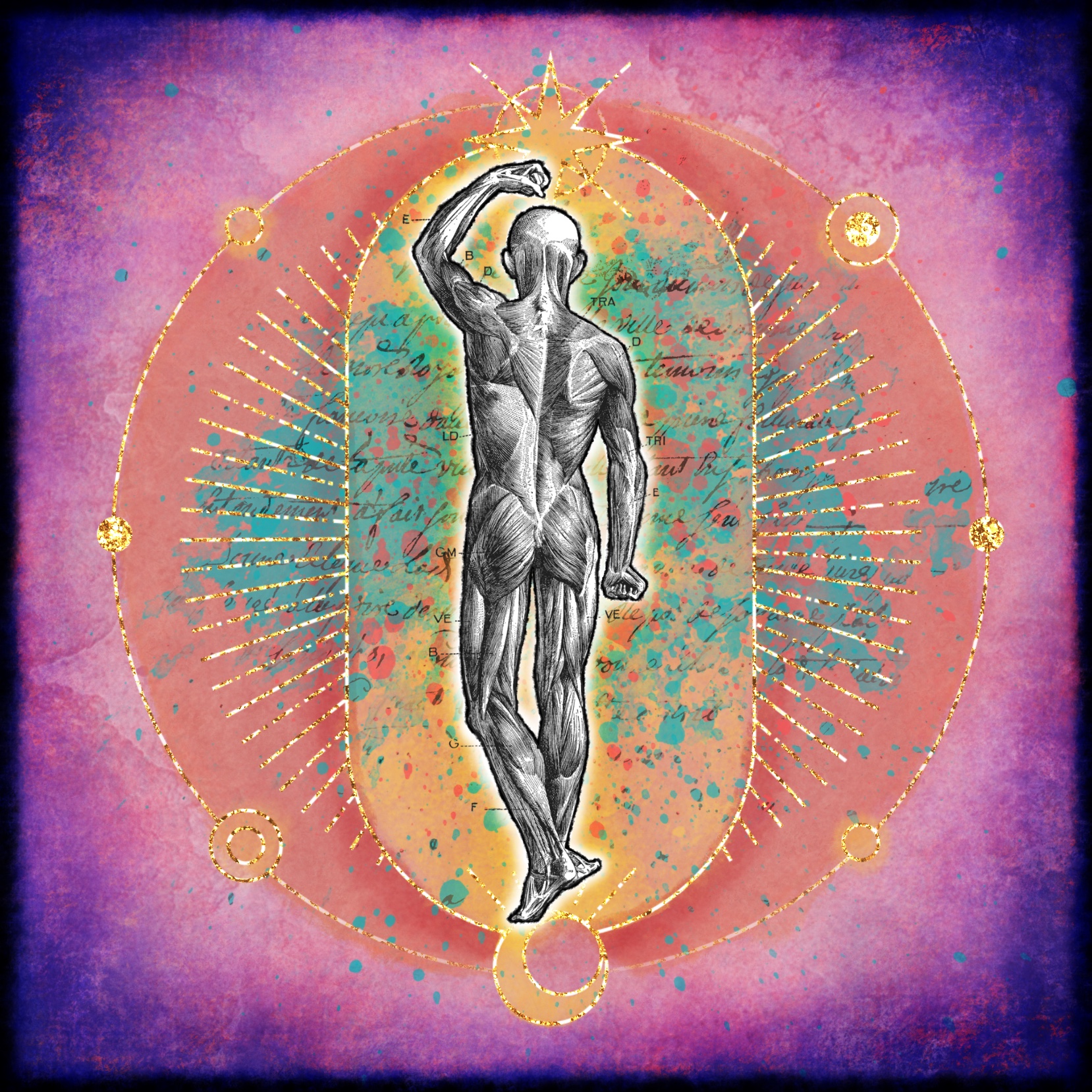
What does it look like to treat your body as a finite resource?
I am privileged to have found a better job at a company that actually prioritizes their human capital and, at a minimum, wants to provide support to sustain their employees across mental, emotional, and physical health. At the end of the day, we are still just resources from which our employers are extracting capital. At least now I’m in in a position where I’m being farmed sustainably, so to speak.
I am privileged to have a supportive, fellow neurodivergent wife, whom I’ll call G, who is just as interested in deconstructing our belief systems and patterns as I am. Someone who wants to create a family that centers each member as an equal, contributing member of the community — even our 4-year-old, whom I’ll call “Little Bear,” gets a full seat at the family meetings. We aren’t interested in having a “perfect” family; we are interested in being a family where everyone is allowed to show up as they are, in the mood they are in, and with whatever unmet needs they may have. Emotions are not seen as disrespectful to have or even to express — we call it “pajamas and flip-flops” talks: Sometimes, showing up in metaphorical pjs and disintegrating sandals is as much as we can rally.
Our success lies in our commitment to each other and ourselves, and the willingness to communicate about freakin’ everything. We have established trust that allows grace in our imperfections and encourages us to say the hard thing, to speak the real talk, even when it’s scary.
It’s hard not to beat myself up when I feel like a failure for needing what feels like so much accommodation at home. G feels the same at times, when her energy is lower. We take turns supporting each other, knowing we have limited resources between us and a shared value that we believe everyone in the family is showing up as their personal best. If Little Bear is having a meltdown? He’s not throwing a temper tantrum or “trying to get his way.” He’s expressing an unmet need, and sometimes, for a four-year-old, the only way to get those emotions out of his little body is to be loud. (Very loud.) As G said to me recently as Little Bear screamed in the background: “You know, even rage is an unmet need.”
Is the revolution about getting healed, or just listening?
Perhaps the most revolutionary thing that any American can do right now is to center their emotions, their needs, and their bodies as holy and sacred. As resources worth protecting, sustaining, and nourishing. Our joy matters. Our lives matter. Our communities matter. Our differences matter. Our emotions and needs matter.
No, personal change alone isn’t enough. I’m not healed. But I firmly believe the framework shift in relationship to our bodies and emotions matters: The revolution isn’t about being healed. It’s about listening to your own wisdom and tuning out the systemic gaslighting all around you. What might be possible when we stop treating bodies as extractable resources? When we begin prioritizing our emotions as much as our intelligence? How might you engage with this idea? What changes might occur in your family, at your job, in your friendships?
Body copy written without the use of AI. AI helped with the title and subheadings.
Hawth Reiter is a trans husband, dad, artist, writer, and Tarot reader who talks to dead people (and spirits of all kinds).